
The Korean automaker plans to boost production in both fast-growing markets with new plants, and fresh models for local and export consumption

Maruti Suzuki, Hyundai and Tata Motors reported a decline in wholesales in September as the companies curtailed dispatches to dealers to reduce inventory build-up amid a decline in demand. Maruti Suzuki India reported a 4 per cent dip in total domestic passenger vehicle wholesales last month to 144,962 units compared to 150,812 units in the year-ago month. The auto major said sales of mini segment cars, comprising Alto and S-Presso, grew marginally to 10,363 units against 10,351 units in September 2023.
In yet another recognition of India's manufacturing expertise, Hyundai Motor India has decided to export engine and transmission to global manufacturing units of its Korean parent company and subsidiary Kia Motors from next year.\n\n\n\n

Leading automakers Maruti Suzuki India, Hyundai Motor, Kia Motors and Tata Motors reported sales growth in the domestic market in November, aided by robust offtakes amid the festival season. While Maruti Suzuki India reported marginal growth, Hyundai logged in its highest ever monthly sales in November. Others like Honda Cars India, Toyota Kirloskar Motor, Mahindra & Mahindra and MG Motor India also reported sales growth in November as compared with the same month last year.

'Every Indian should move to an EV, and the government should not buy any fossil fuel cars. The government should become the first driver of EV adoption.'

Amid slowing volume sales among India's major automakers, Toyota Kirloskar Motor (TKM) has defied the trend with strong growth, driven by demand for hybrid vehicles and a reliable product line up. The company expects this momentum to continue in 2025. "The overall response to our cars has been fabulous. So, we foresee the same momentum in 2025 as well," Sabari Manohar, vice-president, sales-service-used car business, TKM, said.

Glimpses from the Bharat Mobility Global Expo in New Delhi.

Leading carmakers Maruti Suzuki and Hyundai on Thursday reported a dip in wholesales in July as companies reduced vehicle dispatches to dealers amid moderation in demand. Maruti Suzuki India said its total domestic passenger vehicle sales stood at 137,463 units in July against 152,126 units in the year-ago month, down 9.64 per cent.

Tata Motors is looking to consolidate its position in the SUV segment as it marks its entry into the highly competitive mid-size space which is currently dominated by South Korean and Japanese carmakers. The Mumbai-based auto major on Monday launched midsize SUV coupe Curvv with petrol and diesel powertrains with a price starting at Rs 9.99 lakh. The company has already unveiled the electric version of the model in August.

What explains India's love affair with SUVs? They are not exactly "value for money" -- the watchword for brands across segments -- nor always practical. Is it for the badge value? Or the butch imagery associated with SUVs? Maybe both, says Alokananda Chakraborty.
Passenger vehicle wholesales in India witnessed a marginal growth in May on account of high base effect and muted demand due to general elections. The overall passenger vehicle dispatches from companies to dealers stood at 350,257 lakh units last month as compared to 335,436 in the same month a year ago, registering a growth of 4 per cent.

When mounted on a vehicle, the scooter is charged automatically using electricity produced while driving, ensuring that the user can complete their journey seamlessly, using the e-scooter to reach their final destination after parking the vehicle.
Leading carmakers Maruti Suzuki and Hyundai witnessed a double-digit drop in sales in October on account of the global semiconductor shortage impacting production. Kia India, Honda Cars and MG Motor also saw a fall in dispatches last month as compared with October 2020. However, companies like Tata Motors, Mahindra, Nissan and Skoda managed to post positive numbers last month despite the supply chain challenges.

Several carmakers, including car market leader Maruti Suzuki India pulled the plug on diesel models citing higher costs for BSVI variants leaving buyers with limited options.

The government has asked Hyundai Motors to be more forceful in its unequivocal apology, Union Minister Piyush Goyal said on Tuesday on the South Korean firm's Pakistan partner's tweet on Kashmir.

In September, JSW MG Motor India, the newly minted joint venture between SAIC Motor, which is present in 100 countries, and Indian conglomerate JSW Group, launched the Windsor, an electric car that introduced battery as a service (BaaS).

The top six auto brands are: Maruti Suzuki, Hyundai, Tata Motors, Toyota, Kia and Mahindra & Mahindra.

Korean automaker Hyundai Motor Group (HMG) is vigorously aiming to establish a robust presence in India's electric vehicle (EV) segment through the introduction of new models and the establishment of charging stations under Hyundai Motor India (HMIL) and Kia India. Euisun Chung, executive chairman of HMG, who is currently visiting India, urged both companies to deliver products that not only meet but exceed customer expectations on time, thus driving the achievement of these growth targets. The group is strategically working to elevate Kia's market share from the current 6.7 per cent to an impressive 10 per cent in India in the near future.

With Kona catering for the high-end market, the South Korean automobile conglomerate wants to introduce a product in the EV segment to address the mass segment.

Gold sales on Dhanteras are estimated to drop 10 per cent in volume terms year-on-year on sharp 33 per cent annual rise in rates of the yellow metal, according to industry players. Since Dhanteras -- the most auspicious day in the Hindu calendar for buying items ranging from precious metals to utensils -- is celebrated on two days till 1.11 pm on Wednesday, jewellers are expecting more footfalls in both online and offline stores.

Automobile exports from India recovered in the first quarter with all vehicle segments, including passenger vehicles and two-wheelers, witnessing growth following an improvement in the pandemic situation across various international markets. As per the latest SIAM data, total vehicle exports during the April-June quarter this fiscal stood at 14,19,430 units as compared with 436,500 units in the same period of 2020-21 which saw massive disruptions due to the COVID lockdowns across the country, hampering sales as well overseas shipments. SIAM director general Rajesh Menon told PTI that while two-wheeler shipments were better than previous three years, passenger vehicles, three-wheelers and commercial vehicles export numbers were yet to catch up with numbers in the first quarter of 2018-19 fiscal.
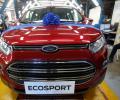
Ford, which had announced to quit the Indian market last year, said it was exploring the possibility of using one of its plants in India to produce electric cars for exports.

South Korean auto giant Hyundai Motor Company is considering tax implications of listing its Indian unit before taking a final call, according to sources privy to the development. Hyundai Motor is mulling an initial public offering (IPO) for its Indian arm to raise around $3 billion (at a valuation of up to $30 billion), and talks are in the early stages between the company and bankers, banking sources revealed. Hyundai Motor India Ltd (HMIL), however, declined to comment on the development.

Tata Motors, Mahindra & Mahindra and Kia India on the other hand witnessed an increase in their market share based on the retail sales last fiscal. As per the Federation of Automobile Dealers Associations (FADA), the retail sales of country's largest carmaker Maruti Suzuki India rose to 14,79,221 units in 2022-23 fiscal, attaining a market share of 40.86 per cent. It had retailed 12,39,688 units in 2021-22 and grabbed a market share of 42.13 per cent.

Some of the notable models set to make a debut next year include the Tata Harrier, the Mahindra S201, the Kia SP Concept, MG Motors' Boujun 530, and the Honda HR-V.

'Some of the launches may get deferred due to the semiconductor shortage, which is unlikely to get resolved before the second half of 2022.'

Passenger vehicle wholesales in India increased by 12.73 per cent to 285,367 units in November as against 253,139 units in the same month last year riding on the back of festive demand, auto industry body SIAM said on Friday. According to the latest data by the Society of Indian Automobile Manufacturers (SIAM), two-wheeler sales rose 13.43 per cent to 16,00,379 units, compared with 14,10,939 units in the same month last year.
Maruti Suzuki India (MSI) and Hyundai posted single-digit growth in domestic sales in June, even as the overall passenger vehicle segment crossed the 20 lakh units sales mark for the first time-ever in the first half this year. Toyota Kirloskar Motor reported a double-digit growth in dispatches to dealers, while Kia saw a dip in wholesales last month. MG Motor India also reported a double-digit increase in retail sales in June 2023 compared to the same month last year.
Almost all of these companies either unveiled their new electric vehicle or alternative energy-powered models.

India's flagship motor show Auto Expo 2023 kicked off on Wednesday with the global unveiling of Suzuki Motor Corporation's concept electric SUV 'eVX' which is slated to hit the market by 2025. The company's Indian arm Maruti Suzuki India is among the major manufacturers participating in the show that has returned after three years. The Concept eVX is a mid-size electric SUV concept designed and developed by Suzuki Motor Corporation (SMC), Japan. It will be powered by a 60 kWh battery pack offering up to 550 km of driving range on single charge.

Owing to the poor market conditions and tepid sentiments, the size of the show has shrunk compared to the last edition, which took place in 2018. A majority of the two-wheeler makers, and several car and commercial vehicle makers, have opted out of this year's show, which opens for the media on Wednesday.

Despite some manufacturers giving the Expo a miss, there will still be plenty of action.

Passenger vehicle wholesale in India increased by 14.19 per cent to 3,10,294 units in October against 2,71,737 units in the same month last year as companies despatched more units to dealers to cater to enhanced demand in the festive season, auto industry body SIAM said on Wednesday. According to the latest data by the Society of Indian Automobile Manufacturers (SIAM), two-wheeler sales also rose 16.88 per cent to 20,53,814 units, compared with 17,57,180 units in the same month last year. Motorcycle sales were at 13,82,749 units as against 11,16,886 units in October 2019, up 23.8 per cent.

Major carmakers, including Maruti Suzuki, Hyundai, Tata Motors on Friday reported growth in their passenger vehicle sales in June as semiconductor shortage woes showed gradual signs of easing out. Other manufacturers, Kia India, MG Motor India and Skoda Auto India also reported robust sales growth last month. Maruti Suzuki India (MSI) reported 5.7 per cent increase in total wholesales at 1,55,857 units in June as compared to 1,47,368 units to dealers in June 2021.
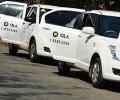
The state government says Ola was using its existing cab aggregator licence to promote bike taxi services.

Passenger vehicle wholesales in India rose to a record high in October as companies pushed dispatches to dealers to cater to the enhanced demand in the festive season. The overall passenger vehicle wholesales in October rose to 391,472 units, up 16 per cent from 336,679 units in the same month last year. Last month witnessed the highest-ever dispatches of passenger vehicles in the domestic market by Maruti Suzuki India and Mahindra & Mahindra.

In its first official engagement with the Indian government, Elon Musk-led Tesla and other global automotive (auto) manufacturers sought clarification on the new electric vehicle (EV) policy, specifically regarding investment guidelines and the timeline for the domestic value addition (DVA) requirement. Officials who attended the meeting told Business Standard that the original equipment manufacturers (OEMs) tried to understand whether the complete investment would be made within three or five years and the duration they would have to achieve the 50 per cent DVA. "The consultation meeting was convened to address queries from auto OEMs.

Auto manufacturers have focused on launching CNG variants of their popular models to meet consumer demand for vehicles with lower running costs.

Of the 15 car manufacturing companies in India, eight have a market share of below 2 per cent, raising questions about their long-term future in a competitive market that has already seen Ford Motors and General Motors slam the door on India.
Market leader Maruti Suzuki India's passenger vehicles sales declined by 2.34 per cent last month at 133,702 units. Hero MotoCorp reported total two-wheeler sales of 480,196 units last month, down 20.05 per cent.
